
DrStrong
[Rolex Moderator]
6930

The History of the Rolex Cosmograph part I : the pump pushers
The legend says that the Daytona fever started in Italy in 1985, when a magazine published on its cover the photo of G. Agnelli on his boat, wearing a classic 6263 with silver dial. A simple photo that would breathe new life into a model that for 22 years had never really found its public (M. Pisani).

The production of the Rolex Cosmograph began in 1963 with the reference 6239, initially powered by the Valjoux 72B of the previous models (ref. 6238).
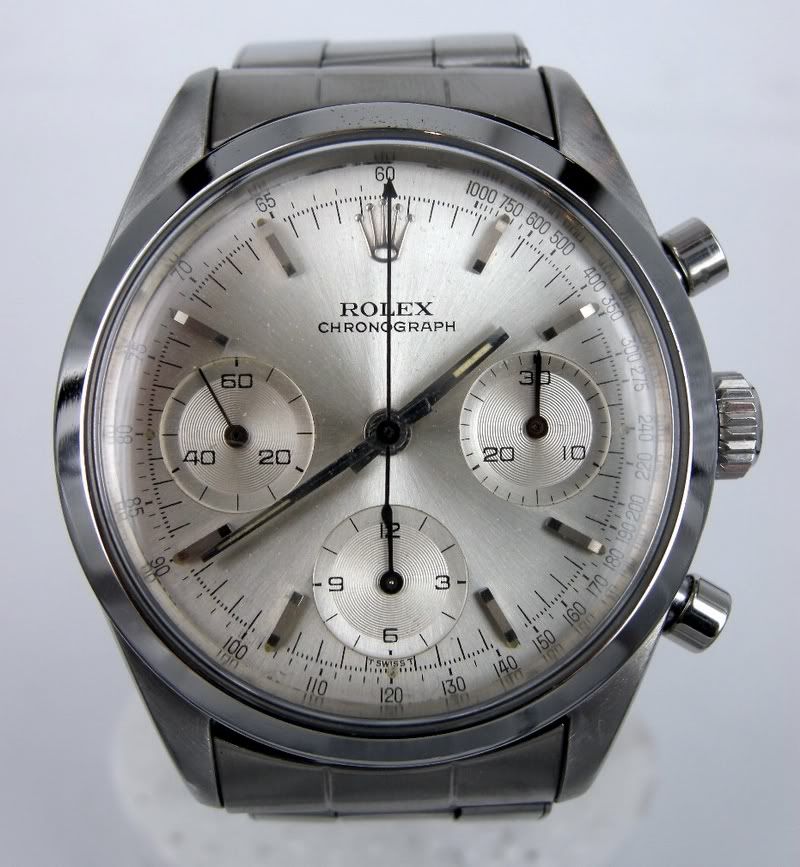
Rolex ref. 6238 (Photo: PremiumWatch)
The watch is characterized by a round case (again similar to the 6238), a tachometric scale engraved onto the bezel and counters in a different colour than the dial (black on light coloured dials, silver on black dials). This colour contrast fulfilled the need to check time more easily in bad visibility, for example during motor races. The twinlock 6mm crown, pump pushers ref. 24-p3 and tropic 21 plexi are the same as on the 6238.
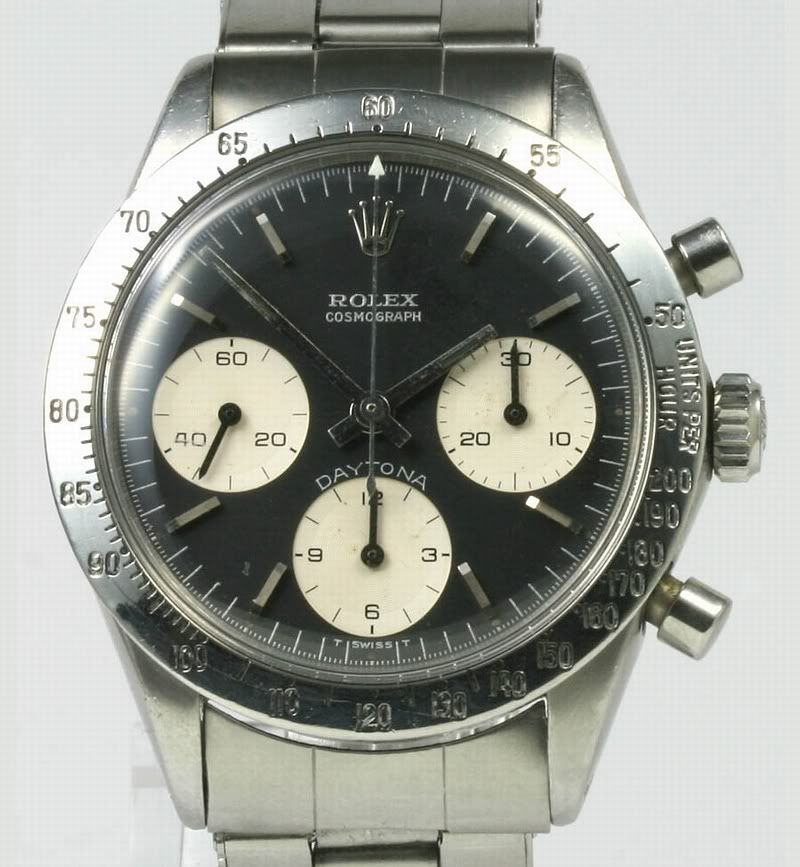
Cosmograph ref. 6239 with black dial (Photo WorldofTime)
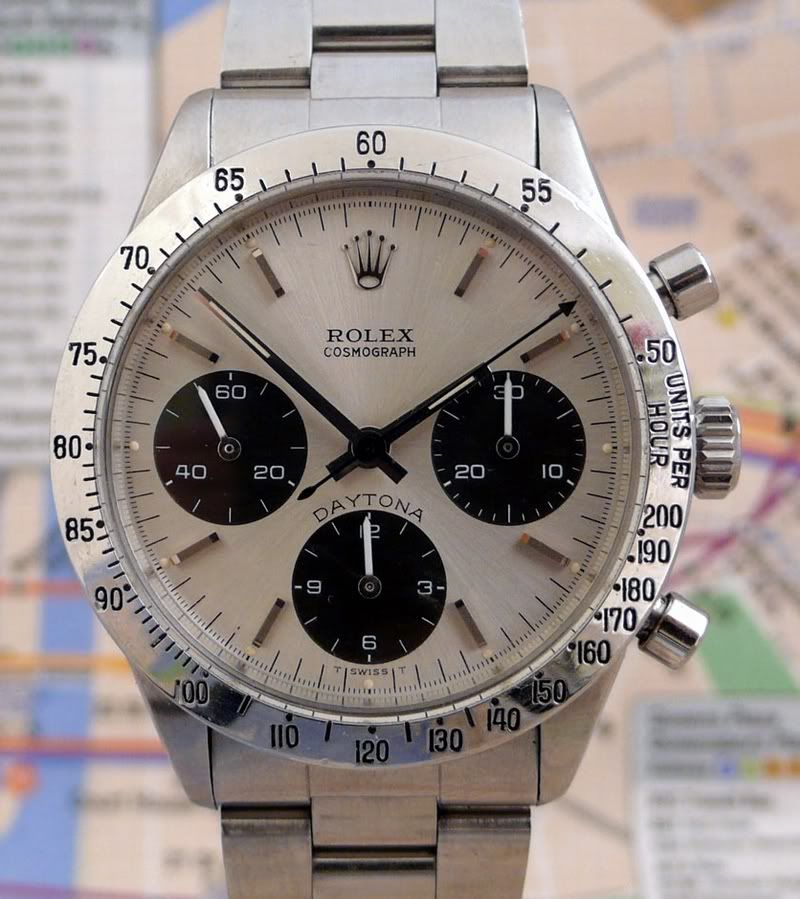
Cosmograph ref. 6239 with silver dial (Photo: A. Shear)
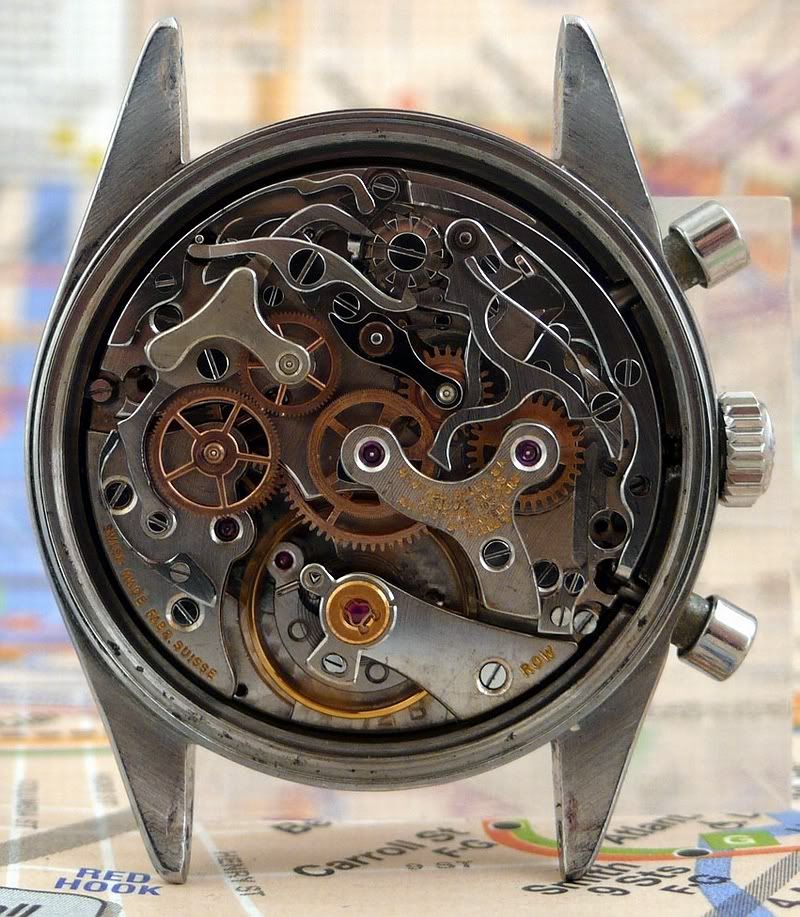
Cal. 72B (Photo: A. Shear)
The oldest examples have a bezel for speed measurement with graduations of up to 300 units per hour; which was replaced by a 200 units per hour bezel in the mid 1960’s.
The inscription DAYTONA on the dial - initially aimed only at the North American market - appeared on a Rolex advert in 1964, when the production began. Rolex was sponsoring an automobile competition on this famous circuit and the legend says that an example in stainless steel was given to all the participants and a gold version to the winner of the race.
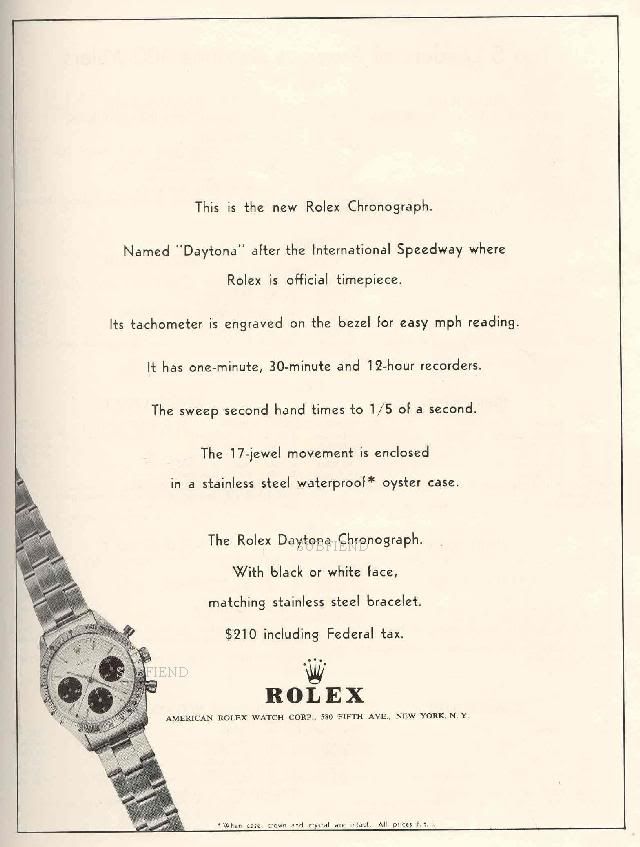
1960’s North American Rolex ad
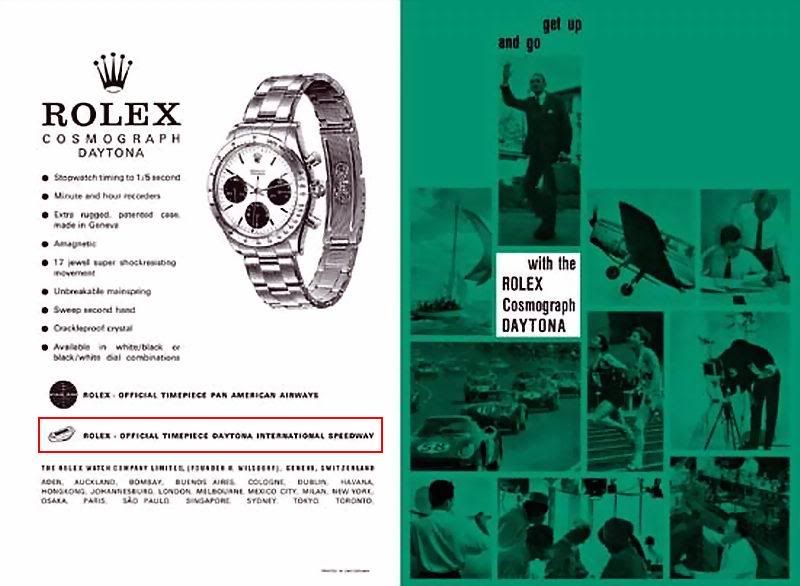
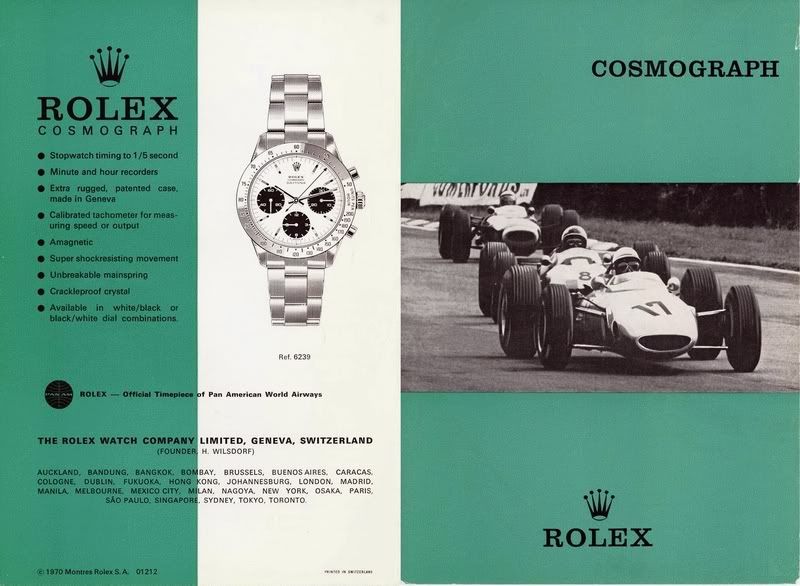
1966 Rolex Cosmograph booklet
Before 1967, the DAYTONA inscription was at the top, under COSMOGRAPH with letters of varying size. In 1967 it appeared on the counter at 6 o’clock. On the earliest black dials, the inscriptions were white or grey and red on more recent examples. The two s sometimes present on the 6239 dial indicate that the dial, though belonging to a model in steel, had indices applied in gold, the standard of manufacture for all gold cases.
In 1965, the cal. 72B is replaced by the improved cal. 722 (that will become cal. 722-1 in 1967). The reference 6241 is introduced the same year, with a black acrylic bezel:
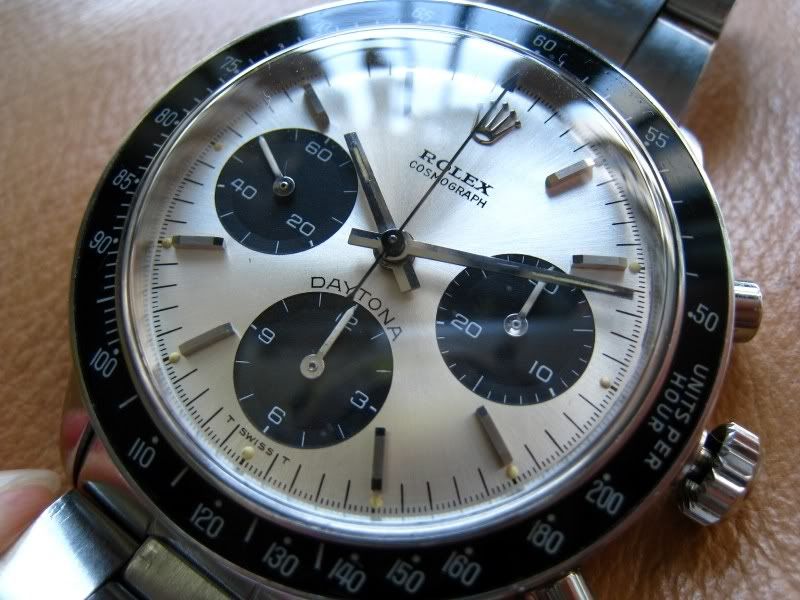
Cosmograph ref. 6241 (Photo nbTimes)
In some cases, the black color of the dial or of the subdials has turned to brown because of heavy sun exposure: these tropical examples are sought after by collectors:
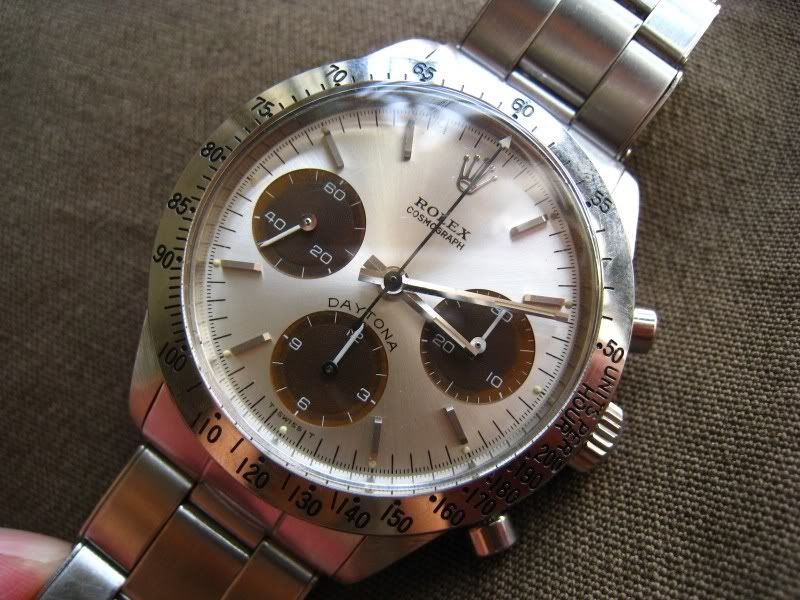
Tropical Cosmograph ref. 6239 (Photo nbTimes)
In 1966, the case of the cosmograph is modified and becomes slightly asymmetric, for an easier winding.
In 1970, the movement is upgraded for the last time with the introduction of the new cal. 727 (21600 bps) and references 6239/6241 then become references 6262/6264 until 1972.
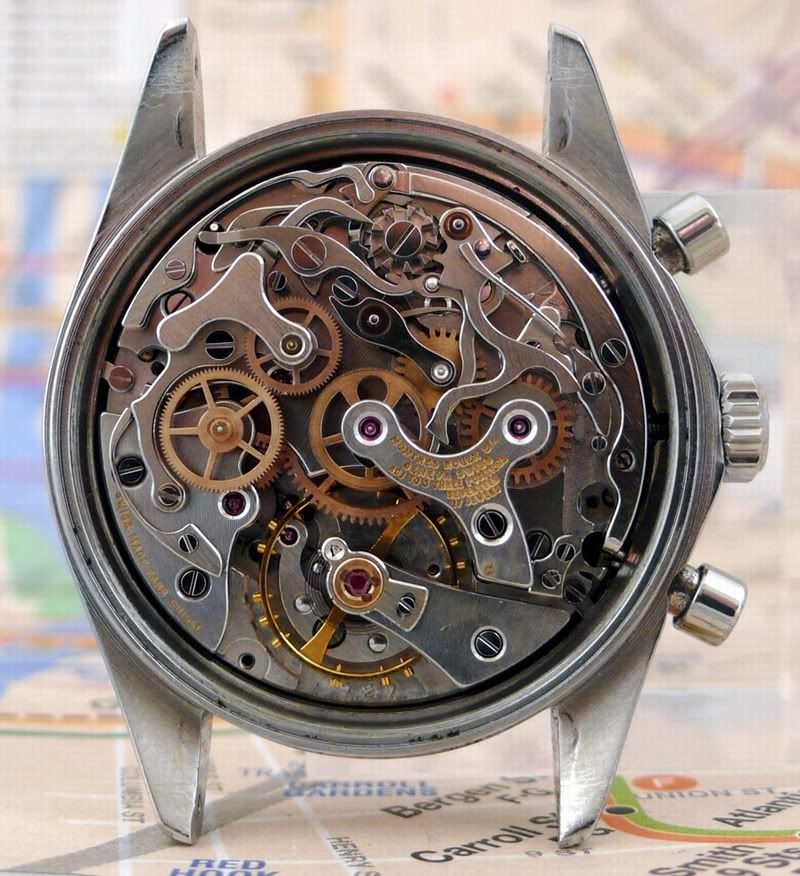
cal. Rolex 727 (Photo: A. Shear)
here’s the original early 1960’s booklet of the Cosmograph ref. 6239:
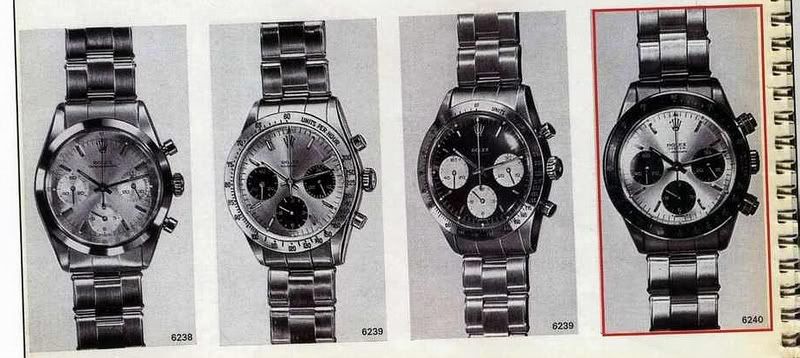
And here are several Cosmographs featured together in a 1960’s Rolex catalogue:
Stay tuned for part two, that will focus on the models with screw down pushers.
Acknowledgements: Marcello Pisani
This message has been edited by DrStrong on 2009-04-14 05:43:54 This message has been edited by DrStrong on 2009-04-20 01:38:49 This message has been edited by DrStrong on 2011-01-24 00:45:50
The History of the Rolex Cosmograph part I : the pump pushers

Quickly quickly

Very nice post, Jeff
Thanks Nicolas !
Excellent post Jeff - a great deal of original work. Interesting and loved

Loved the history lesson...Thanks Dr. Strong...and the Legend goes on...

Great article...
This is Brilliant!!!
Thanks Rene
Some more pics of the 6239 in Gold


Very nice works. Can't wait to see the rest

Thanks Jeff...


Thanks Jeff for another great job...

Photo???

eparisini
